

Get the link to change the password

E-mail *

Send
Give up
logo
022 822 024

Assistment and Call Center

New account

New account

First name *
The field will be filled with letters (A to Z), who will be reflected at articles and comments
Last name *
The field will be filled with letters (A to Z), who will be reflected at articles and comments
Login *
The field will be filled with letters (A to Z) and/or numbers, without free spaces. Can be used the symbols, except the symbol _
E-mail *
The field will be completed with un valid e-mail. To this e-mail will be sent the confirmation link about the registred user account
Password *
The password will be contain at 5 to 15 characters and will be different for the date indicated at the login, name and firstname

Repeat password *

Cancel
Sign in

Sign in

Sign in can be to do with e-mail adresss or login

E-mail/Login *

Password *

Sig in with your Google account
MPass authentication
Cancel

Get the link to change the password

E-mail *

Send
Give up
EN
  • RO
  • RU
  • EN
RORUEN
logo
About usDaily4The expert position 3Related sectionAccounting sector1Services17Info-videoContacts

PP „Monitorul Fiscal FISC.MD”

MD-2005, Kishinev
Constantin Tanase street, no. 6
Inside „Fertilitatea-Chișinău” Corporation., 3-th floor, office 320

Antechamber:

022 822 024

E-mail:

secretariat@monitor.tax

Support and Contact Center:

022 822 024

You want to obtain an operative and complex answer?

Send your question and obtain the answer from the experts in the shortest time, at your e-mail or published in the compartment „Questions and answers”

Ask us a question

Ask us a question

You want to obtain an answer or you will can to suggest as an article necessary for your work process? Sign in on the page, send your question or suggest and obtain the answer from the experts in the shortest time, at your e-mail or published in the compartment „Questions and answers”.

E-mail: *

Message *
Message
0/500
Cancel the message
ArhivaFrequent questionsTerms and conditions of use of the page Privacy policyInstrucțiuni pentru ștergerea contului

Subscription at Newsline

facebooktwitterlinkedintelegraminstagramgoogle
MAIB logoMasterCard logoVisa logo

Site version: 1.0

Copyright 2021

All riths on the page monitorul.fisc.md belongs P.P. „Monitorul Fiscal FISC.MD”. Full or partial reproduction about informations or illustrations in either compartment is possible only with the written consent of the publication. Intellectual piracy is punishable by law.

icon

Feedback

To monitor the status of sent Feedback, initial we recommend to you to do sign in on the page. So, the answer at PP „Monitorul Fiscal FISC.md” at feedback will be save and will be displayed in your personal profile. If the feedback is sent an you aren't authentificated on the page, the message will be sent tot your e-mail.

E-mail: *

Message *
Message
0/500
Cancel the message
iconiconicon
icon
Facebook iconTwitter iconLinkedIn iconTelegram iconVK icon
icon
  • Home page
  • Daily
  • Panorama
  • Cum a ajuns Serbia în pragul falimentului
Banner A1
Banner A2
Banner C3
Banner C4
Banner C5
Banner A1
Banner A2
Article image

Panorama

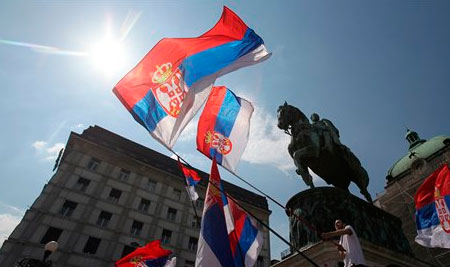
Cum a ajuns Serbia în pragul falimentului

În fiecare an, peste jumătate din Produsul Intern Brut al Serbiei merge către plata salariilor bugetarilor şi a pensiilor. Aceste cheltuieli uriaşe au adus statul încă o dată la mâna FMI, însă partidele din cadrul coaliţiei aflate la guvernare nu reuşesc să ajungă la un acord cu privire la implementarea unor măsuri de austeritate. La şapte luni de când Serbia a scăpat ca prin urechile acului de un nou împrumut de la Fondul Monetar Internaţional graţie unei emisiuni de obligaţiuni în valută care s-a bucurat de succes în rândul investitorilor, guvernanţii de la Belgrad se văd încă o dată nevoiţi să apeleze la creditorul internaţional pentru a scăpa de intrarea în incapacitate de plată a datoriilor. De data aceasta, salvarea din ultimul episod s-a transformat în principalul motiv de teamă: investitorii nu s-au mai arătat la fel de binevoitori faţă obligaţiunile guvernamentale denominate în dolari scoase la vânzare de sârbi, cerând dobânzi de 7,46% pentru a împrumuta statul pe opt ani. Ca regulă, orice dobândă care depăşeşte pragul de 6% este considerată nesustenabilă şi marchează momentul în care statul ar trebui să-şi asigure finanţare pe alte căi, la dobânzi mai avantajoase, precum credite de urgenţă de la FMI sau Banca Mondială. Până în iunie 2014, Serbia trebuie să refinanţeze datorii în valoare de patru miliarde de euro. Astfel, pe lângă negocierea unui nou împrumut de la FMI, sârbii au încercat să se împrumute şi de la state precum Emiratele Arabe Unite, China şi Rusia, însă până acum nu a reuşit să ajungă la nicio înţelegere în acest sens. Belgradul intenţiona să vândă eurobonduri în valoare de un miliard de euro în septembrie sau în octombrie, însă, în contextul dobânzilor uriaşe, pare că a renunţat la planuri. Guvernul de la Belgrad a adoptat şi un pachet de măsuri de austeritate, printre care tăierea cu 10% a salariilor bugetarilor, majorarea TVA de la 8% la 10% pentru produse de bază, precum şi diminuarea unei serii de subvenţii acordate de stat şi reducerea cheltuielilor publice.
„Fără aceste măsuri am intra în faliment peste doi ani”, a declarat Lazar Krstic, ministrul sârb al Finanţelor.
Jumătate din PIB se duce în salarii şi pensii Serbia se confruntă cu o perioadă de recesiune, înregistrând o contracţie economică de 1,7% în 2012, în timp ce rata naţională a şomajului a urcat la 24%. Aceasta este a doua perioadă de recesiune prin care trece Serbia în mai puţin de trei ani. Cu toate acestea, banca centrală estimează o creştere economică de 2% pentru 2013 şi 2,5% în 2014, pe fondul avansului exporturilor şi a producţiei agricole peste aşteptări. În momentul de faţă, estimările guvernamentale anunţă un deficit bugetar de 4,7% din Produsul Intern Brut (PIB), însă analiştii susţin că, în realitate, acesta se va ridica la peste 8% pe întregul an. Datoria publică a statului este situată la 66,1% din PIB. Cheltuielile bugetare prea ridicate sunt cele care au dezechilibrat economia sârbă, sunt de acord analiştii. Anual, Belgradul cheltuieşte mai bine de jumătate din PIB (adică peste 30 de miliarde de euro din 59,2 miliarde de euro) pentru plata salariilor bugetarilor şi a pensiilor. Tensiunile politice ameninţă redresarea economică, de aceea, programul de austeritate derulat acum este menit, în primul rând, să reducă cheltuielile statului, dar un scop la fel de important este recâştigarea încrederii pieţelor.
„Pur şi simplu trebuie să reducem deficitul bugetar. Modalitatea în care vom distribui reducerile între diverse instituţii şi diverşi beneficiari ai bugetului va fi în primul rând un proces politic”,
a explicat Krstic, aducând în discuţie şi cealaltă problemă majoră care a contribuit la această situaţie şi anume tensiunile politice. Planurile ambiţioase de austeritate au fost anunţate încă de săptămâna trecută de vicepremierul Aleksandar Vucic, liderul Partidului Progresiv, partenerul majoritar în coaliţia aflată la guvernare. De cealaltă parte, premierul Iviţa Dacic, liderul Partidului Socialist, s-a arătat reticent în aplicarea reducerilor şi chiar a amânat prezentarea programului de tăieri.

via adevarul.ro

„Acest articol aparține exclusiv P.P. „Monitorul fiscal FISC.md” și este protejat de Legea privind drepturile de autor.
Orice preluare a conținutului se face doar cu indicarea SURSEI și cu LINK ACTIV către pagina articolului”.

3
dna1s7k9v2.png

2261 views

The date of publishing:

09 October /2013 09:46

Catalogul tematic

Noutăți

Tags:

Serbia | faliment | FMI

0 comments

Only users registered

New account

First name *
The field will be filled with letters (A to Z), who will be reflected at articles and comments
Last name *
The field will be filled with letters (A to Z), who will be reflected at articles and comments
Login *
The field will be filled with letters (A to Z) and/or numbers, without free spaces. Can be used the symbols, except the symbol _
E-mail *
The field will be completed with un valid e-mail. To this e-mail will be sent the confirmation link about the registred user account
Password *
The password will be contain at 5 to 15 characters and will be different for the date indicated at the login, name and firstname

Repeat password *

Cancel
and autorized

Sign in

Sign in can be to do with e-mail adresss or login

E-mail/Login *

Password *

Sig in with your Google account
MPass authentication
Cancel

Get the link to change the password

E-mail *

Send
Give up
they have the right to post comments.